

Outdoor Fireplace Ideas for a Cozy and Stylish Backyard
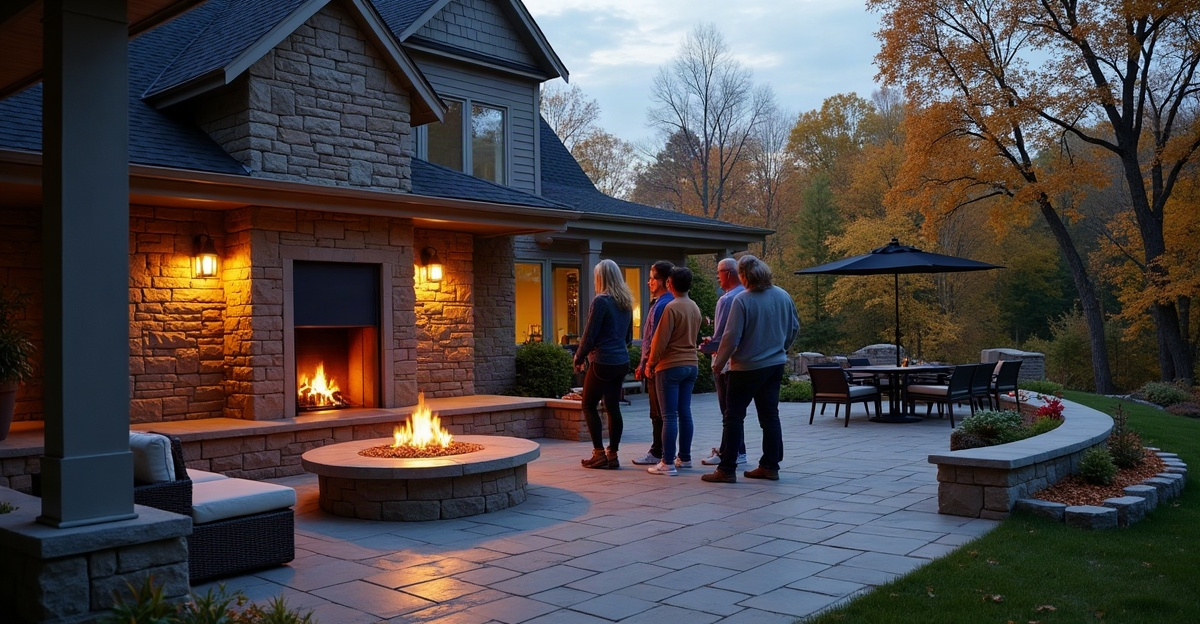
Outdoor fireplace ideas should support how we use our backyard. We need room for seating, walkways, dining, and safe patio access. A strong design accounts for fuel, wind, drainage, local codes, and Minnesota weather. It adds lasting comfort without crowding the area.
Key Takeaways
- We plan the fireplace within the full patio layout. We account for gathering size, traffic flow, views, privacy, and nearby structures.
- We choose wood-burning fireplaces for a classic fire experience. We choose gas for easier operation. We also compare fireplaces, fire pits, and fire tables by heat output, footprint, and upkeep.
- We match the placement to the yard. Edge locations keep more patio space open, while focal-point fireplaces, retaining walls, and raised patios define larger or sloped spaces.
- We use exterior-rated materials. We also prepare the foundation and manage patio pitch, grading, and snowmelt drainage. These steps protect the fireplace during Minnesota freeze-thaw cycles.
- We confirm permits, setbacks, fuel connections, ventilation, and local safety rules before we build a permanent fireplace.
Plan the Fireplace Around How the Backyard Will Be Used
An outdoor fireplace works best as part of a complete patio plan, with room for seating, circulation, dining, and the everyday routines that happen outdoors. We start by defining the job the feature needs to do: create ambiance, provide warmth, support cooking, anchor entertaining, or combine several of those goals.
The number of people using the space matters early. A small family gathering area needs a different footprint than a patio built for larger weekend gatherings. Seasonal use, maintenance expectations, fuel access, and the planned investment also guide the right direction. A wood-burning feature asks for wood storage, ash cleanup, and smoke planning. Gas offers easier operation but needs a feasible fuel connection and qualified installation.
Good placement protects the rest of the outdoor living space. We consider patio size, furniture spacing, walking paths, views from inside the home, privacy, nearby structures, neighboring homes, drainage, and snowmelt. A fireplace that looks impressive on a plan can become a frustration if it blocks a main path or leaves too little space for a comfortable backyard seating area.
In Shakopee and across Scott, Carver, Dakota, and Hennepin Counties, Minnesota weather adds another layer of planning. Wind, winter access, runoff, and the orientation of nearby homes all affect how a patio fireplace performs over time. A knowledgeable outdoor living design process helps bring those details together before construction begins.
Questions to Ask Before Adding an Outdoor Fireplace
Before selecting a style or material, we recommend answering these practical questions:
- How many people will use the space?
- Is the fireplace mainly for ambiance, warmth, cooking, or entertaining?
- Does the patio allow room for seating and safe circulation?
- Will wind or nearby homes make wood smoke difficult?
- Is gas available or feasible on the property?
- How will drainage and snowmelt move around the patio?
- Is a fireplace, fire pit, or fire table the better fit for the intended use and investment level?
Outdoor Fireplace Ideas That Work With Different Patio Layouts
The strongest outdoor fireplace ideas match the shape, grade, and function of the yard. Instead of forcing one feature into every backyard, we look at how people move through the space and where the fire feature can add comfort without taking away usable patio area.
A fireplace placed as the main patio focal point creates a defined seating zone and sends heat in a clear direction. This layout works well on larger patios, especially where the fireplace can frame a view or create a visual endpoint from the home. A stone fireplace can also add privacy by screening part of the patio from a neighboring lot.
At the edge of a seating area, a patio fireplace preserves open space through the center of the patio. This is often a practical choice for active backyards, where people need a direct path between the house, lawn, dining area, and doors. The fireplace still feels connected to the gathering area without interrupting circulation.
Grade changes create another opportunity. Pairing a fireplace with a retaining wall or raised patio can make a sloped yard feel organized and usable. The hardscape should handle both the visual transition and the drainage needs of the site. Our hardscape construction work brings patios, walls, steps, and fire features into one coordinated plan.
For outdoor kitchens and dining areas, separation matters. The cooking zone, dining zone, and fire zone each need enough room to work safely and comfortably. A fireplace may sit beyond the dining area as a relaxed after-dinner destination, rather than crowding the grill or food-prep space. This approach pairs well with a planned outdoor kitchen area.
Smaller yards can still support fireplace outdoor ideas with a streamlined footprint. A compact feature along a patio edge, with built-in seating kept to a sensible scale, can create warmth without crowding chairs, doors, or access routes. Larger properties have room for custom stone fireplace designs that serve as an architectural focal point for an extended outdoor living space.
Covered-patio and pavilion-adjacent fireplace concepts can feel especially inviting in spring and fall. These projects need professional evaluation of ventilation, chimney details, materials, structure, and current code requirements. We also account for prevailing winds, chimney direction, smoke behavior, fuel access, nearby homes, and how the backyard is used throughout the year.
Project photography is especially useful for this stage. Completed patio and fireplace images, before-and-after layouts, and a labeled plan showing seating zones, walkways, fireplace placement, and wind direction can help clarify the best outdoor fireplace design ideas for a specific property. Our project gallery shows how finished materials and layouts work together.
Choose the Right Flame: Wood-Burning, Gas, Fire Pit, or Fire Table
A wood-burning outdoor fireplace brings the familiar flame, aroma, and ritual many homeowners enjoy. It also requires a chimney, wood storage, ash cleanup, and careful smoke planning. Chimney height, prevailing wind, lot size, enclosed yards, seating placement, and neighboring homes all deserve attention before selecting a wood-burning outdoor fireplace.
A gas outdoor fireplace offers quick ignition, a controlled flame, less smoke, and less cleanup. It can be a practical fit for tighter lots or for households that want to use the feature without managing firewood. The gas line must be planned correctly, and qualified professionals should handle the installation and all related safety requirements.
An outdoor fireplace vs. fire pit vs. fire table comparison should begin with how the group uses the patio. An outdoor fireplace has a vertical presence, directional heat, and potential privacy benefits, but it needs a larger footprint and more involved construction. A fire pit supports communal seating around an open flame and usually sits lower in the landscape, making it more flexible in many layouts. A fire table is compact and convenient, though it generally provides less heat and has less architectural impact.
These options are not interchangeable. Each has different construction needs, heat output, costs, maintenance demands, and user experiences. Portable fire features may fit certain do-it-yourself situations. Permanent built-in fireplaces, masonry hearths, gas systems, structural work, electrical connections, and chimney construction require professional planning and installation. We can help determine whether a fireplace is the right answer or whether a fire pit or fire table will serve the space better. Explore our landscape fire features for practical options.
Build for Minnesota Weather: Materials, Drainage, and Safe Placement
Minnesota fireplaces must stand up to freeze-thaw cycles, snow, moisture, runoff, and fast temperature changes. Material appearance matters, but proper assembly matters just as much. A well-built masonry feature needs suitable base and foundation preparation, compatible materials, and construction details that manage exterior exposure.
Natural stone provides a durable, traditional appearance when assembled correctly. Manufactured stone veneer offers design flexibility but depends on the right substrate and detailing. Brick creates a classic masonry look. Concrete and hearth materials must be selected for outdoor exposure, while metal components need to suit the fireplace system and local climate.
Drainage deserves the same attention as the fireplace face and cap. Snowmelt and runoff should not collect at the hearth, fireplace base, or nearby seating area. Patio pitch, grading, hardscape joints, and adjacent landscaping all influence where water goes. Addressing drainage early helps protect the feature and keeps the patio more comfortable through wet weather and spring thaw.
Outdoor fireplace safety requirements vary by municipality, lot, fuel source, project scope, and association rules. We recommend verifying current requirements with the City of Shakopee or the local municipality before construction. Setbacks, permits, fire code, gas-line requirements, chimney details, HOA rules, ventilation, nearby structures, and utility locations all need review by qualified professionals. Close-up photos of stonework, caps, hearths, patio surfaces, and water-management details are useful references for evaluating construction quality.
Simple and Budget-Conscious Options Without Cutting Important Corners
Simple outdoor fireplace ideas can include compact built-in features, prefabricated outdoor fireplace systems, or a smaller gas unit with a clean finish. These choices can reduce the visual and construction scope while still requiring proper site preparation, utilities, drainage, and safe installation.
Outdoor fireplace ideas on a budget should begin with honest priorities. A permanent masonry fireplace is not necessarily an inexpensive addition, and cost control should never compromise the base, fuel connection, masonry assembly, drainage, or safety details. Those parts protect the investment and support long-term performance.
A smaller footprint often makes the most sense. A compact gas fireplace, simpler cladding, or a streamlined prefabricated system can leave more room for furniture and future patio improvements. Phasing the patio over time may also allow the main fire feature to be completed first, with walls, lighting, or expanded seating added later.
Custom masonry fireplaces and lower-cost prefabricated options serve different needs. A custom stone fireplace offers greater design flexibility and a substantial architectural presence. A prefabricated unit or compact gas fireplace may provide dependable warmth and atmosphere with less construction scope. In some yards, a fire pit or fire table is the smarter fit. We recommend choosing the feature that supports the patio rather than an oversized structure that limits seating and circulation.
What Shapes the Investment and When to Bring in a Professional
A site-specific quote is the most reliable planning tool for a permanent outdoor fireplace. Investment depends on the size and type of fireplace, wood-burning or gas fuel, prefabricated or custom masonry construction, materials, foundation work, gas or electrical connections, site access, grading, drainage needs, patio integration, retaining walls, and other property constraints.
Built-in gas, masonry, and structural fireplace projects need proper planning and qualified installation for safety, durability, and compliance with current local requirements. A professional consultation evaluates the patio layout, wind and smoke concerns, utility feasibility, drainage, material choices, construction access, and whether a fireplace truly fits the property.
Planning a patio and outdoor fireplace in Shakopee or the Twin Cities south metro? Outdoor Oasis can help us evaluate the space, choose practical materials, and create an outdoor living area built for Minnesota conditions. Request a consultation to discuss the project.