

How to Fix a Sinking Patio? Causes and Repair Solutions
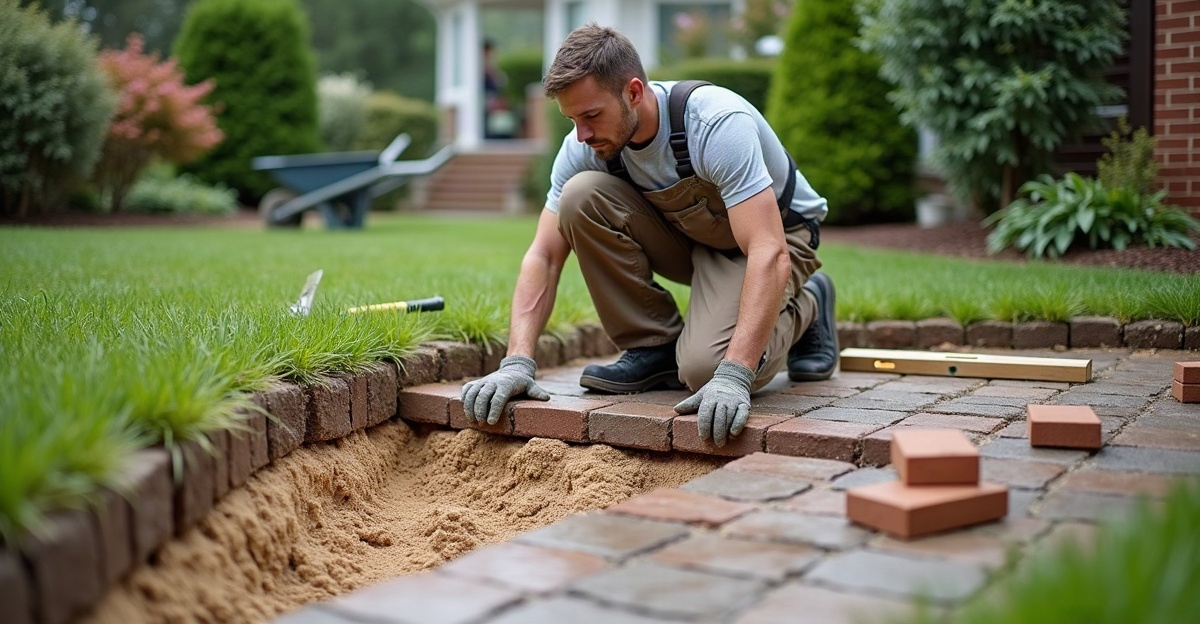
We identify the cause before we fix a sinking patio. Water, poor base compaction, erosion, failed edging, and shifting soil can all cause settlement. A lasting repair rebuilds the compacted aggregate base, improves drainage and slope, and resets pavers or bricks for stable support.
Key Takeaways
- We treat standing water, loose pavers, shifting edges, unstable steps, and drainage directed at structures as signs that a sinking patio needs prompt attention.
- We can often repair small, isolated low spots by lifting and resetting pavers. We inspect the bedding layer and aggregate base first.
- We use joint sand to fill paver joints and bedding sand to level the surface. Neither material can replace a damaged or settled crushed-aggregate base.
- We repair widespread or recurring settlement with base restoration, recompaction, edge-restraint repairs, and drainage or grading improvements.
- We recommend a professional assessment for settlement near foundations, retaining walls, utilities, or steps. Persistent pooling water also calls for expert evaluation.
When a Sinking Patio Needs Prompt Attention
A sinking patio can create a trip hazard, hold water against nearby structures, and allow a small surface issue to become a larger repair. Loose pavers or bricks, unstable steps, standing water, and drainage that runs toward a foundation, retaining wall, or utility area all need prompt attention.
A patio does not need to be perfectly level. It needs a deliberate drainage pitch that carries water away from the home, walls, steps, and other structures. Proper patio drainage protects the surface and the supporting materials below it.
Adding sand beneath a few sunken pavers can help with a small, stable low spot. It will not fix erosion, poor slope, persistent drainage issues, or a failed aggregate base. The right patio repair begins by finding the reason the surface moved.
Uneven patio pavers may be isolated, or they may signal a broader issue beneath the surface. We recommend checking for movement underfoot, open joints, spreading edges, and water that remains after rain. Those clues often tell us whether a reset is enough or whether the patio needs deeper repair work.
What Causes Brick and Paver Patios to Sink?
Several conditions can cause a sinking brick patio or sinking paver patio. In many cases, water is the main reason. Water can soften supporting soils, wash out bedding material, and move aggregate from beneath the pavers.
Common causes of a sinking patio include:
- Inadequate base preparation
- Insufficient compaction
- Poor drainage
- Erosion
- Shifting soils
- Failed edging
Each problem can affect a patio differently, but they often overlap.
A downspout that discharges beside the patio can create a settled section near the home. Surface grading that sends runoff across the patio can wash material out at the edges. A blocked drainage outlet can leave the base saturated for long periods. These conditions explain why pavers may sink even when the surface originally looked well built.
In Shakopee and throughout the Twin Cities area, freeze-thaw cycles, spring snowmelt, saturated soils, and heavy rain can accelerate movement below a patio. Minnesota weather places real demands on hardscape construction. Water that enters a weak base can freeze, expand, thaw, and leave gaps that allow pavers to settle.
Proper excavation depth, a compacted crushed-aggregate base, and correct slope matter in this climate. The aggregate base supports the patio load and helps manage movement. Compaction keeps that material stable. Slope directs water where it belongs.
Failed edge restraints can also contribute to patio base failure. As pavers spread outward, joints open and edges become uneven. That movement can allow the field of pavers to shift, settle, or lose its intended alignment.
How to Tell Whether the Problem Is Isolated or Widespread
A single patio low spot does not always mean the entire patio has failed. A few settled pavers near a downspout, for example, may be repairable if the surrounding surface remains firm and drainage has been corrected.
An isolated issue usually has clear limits. The affected units may sit low, but nearby pavers remain tight, stable, and properly sloped. After removing those units, we can inspect the bedding layer and base to confirm whether the issue stays within that area.
Widespread patio settlement signs call for a more complete assessment. Broad areas of uneven pavers, recurring dips, loose bricks, shifting edges, and sections that move underfoot often point to a base, grading, drainage, or erosion problem.
Standing water after rain is an important warning sign. Patio pooling water can indicate poor surface slope, an obstructed outlet, or a saturated base. Settlement beside a foundation, retaining wall, steps, or utilities also deserves careful review before any pavers are lifted.
Brick and paver repair methods vary with the existing material condition, edge restraints, and original base construction. Sound bricks and pavers can often be salvaged. Cracked, worn, or mismatched materials may need replacement to restore a stable, consistent surface.
Repair Options That Match the Underlying Problem
The best way to fix a sinking patio depends on what caused the movement. We do not treat joint sand as a cure for structural settlement. A lasting repair restores support below the pavers and corrects the water issue that led to the problem.
For a small, stable area, paver patio leveling usually follows a direct process:
- Remove the affected pavers or bricks.
- Inspect the bedding and base layers.
- Add and compact appropriate base material where needed.
- Restore the bedding layer.
- Reinstall the pavers or bricks.
- Verify the drainage slope.
- Refill the joints.
The three material layers have different jobs:
- Polymeric or joint sand fills the joints between pavers and helps stabilize the surface.
- Bedding sand forms a thin leveling layer directly beneath the pavers.
- Compacted crushed-aggregate base below the bedding sand carries the load and provides the main structural support.
Joint sand alone does not correct structural settling. If the compacted aggregate base has washed out, softened, or settled, the base must be repaired before reinstalling the surface.
Widespread settlement often requires removing the affected pavers, correcting the base, recompacting materials, reinstalling pavers, and repairing or replacing edge restraints. It may also require grading changes or patio drainage repair before the surface is rebuilt.
Erosion-related repairs often begin with water management. We may need to correct downspout discharge, redirect runoff, adjust surrounding grade, or install an appropriate drainage solution. Our hardscape construction work focuses on the layers below the finished surface as much as the surface itself.
When a DIY Patio Repair Makes Sense—and When It Does Not
A DIY sinking patio repair can make sense for a small, stable area with an obvious cause. A few low pavers may be reset successfully when drainage already works, the surrounding patio is sound, and the aggregate base remains firm.
Before starting, we recommend lifting enough pavers to inspect the actual support below. Simply adding bedding sand and setting pavers back in place may look good at first, but it will not solve washout, poor slope, or a weak base.
Professional patio repair makes more sense when settlement covers a large area or returns after previous repairs. We also recommend a professional evaluation for standing water, foundation-adjacent drainage concerns, unstable steps, retaining-wall movement, and areas near utilities.
Recurring paver settlement is rarely a surface-only issue. Repairing the visible dip without correcting the source can mean paying twice after the next snowmelt or heavy rain. Knowing when to replace patio base materials begins with a clear assessment of drainage, compaction, grading, and soil conditions.
For properties in the local area, a patio drainage contractor Shakopee residents can rely on should evaluate how runoff moves across the whole space, not just the sunken section. Our full project management approach keeps drainage corrections, base repair, and final installation coordinated from start to finish.
What Affects the Scope of a Lasting Patio Repair?
Patio repair cost factors depend on the conditions at the site. A small reset has a different scope than a repair involving excavation, drainage changes, base replacement, and edge-restraint work.
Affected square footage matters, but it is only one part of the decision. Access to the patio, the depth of excavation, the base condition, drainage corrections, material replacement, and edge repairs all affect the work required.
Salvaging existing pavers or bricks may help preserve the look of an established outdoor space when the materials remain structurally sound. Cracked, deteriorated, or unavailable materials may need replacement. Color variation can also be a consideration with older brick patio repair Twin Cities projects.
A long-lasting patio repair addresses both the sunken surface and the reason it settled. Water management, proper base preparation, compaction, and drainage slope protect the repair long after the pavers are back in place.
For recurring settlement or drainage concerns, we can provide an on-site patio drainage evaluation and explain what makes sense for the space. There is no need to assume a full replacement or unnecessary upgrades are required. Property owners can request a site evaluation to discuss practical repair options with our team.