

Paver Patio Repair Cost: What Homeowners Can Expect to Spend?
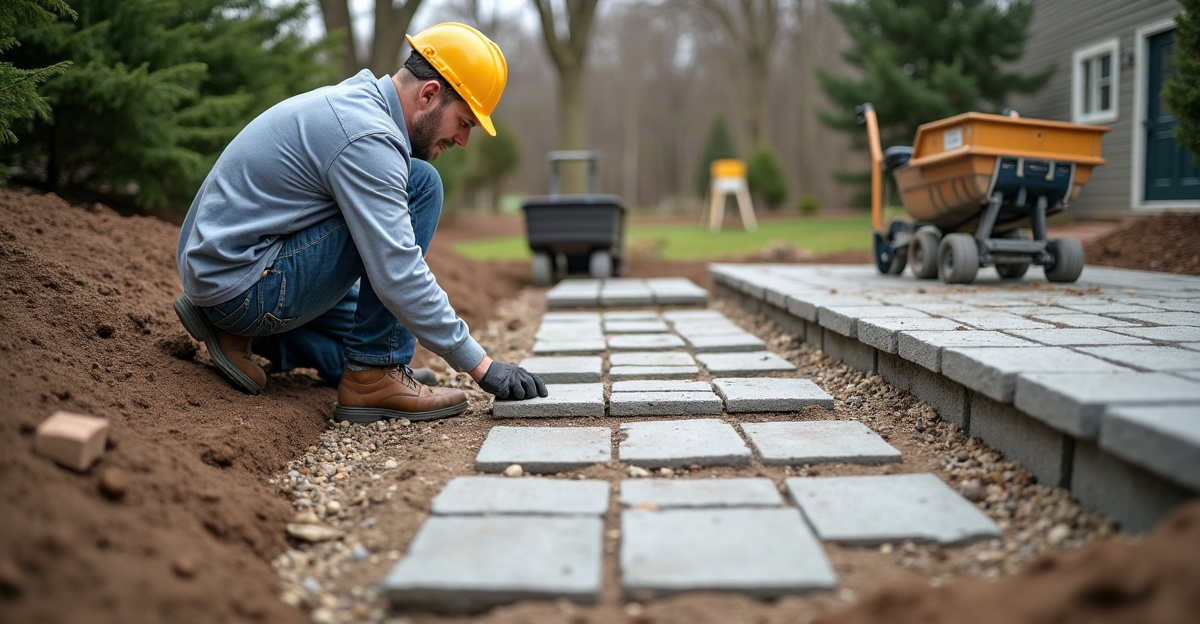
Paver patio repair costs depend less on visible damage and more on the work below the surface. We assess base repairs, drainage corrections, compaction, and edge restraints. Small, isolated issues may still require a minimum service charge. Widespread settlement, recurring ponding, or failing materials may make partial reconstruction the stronger long-term value.
Key Takeaways
- We can often reset loose, cracked, rocking, or sunken pavers in isolated areas when the surrounding base remains stable.
- Excavation depth, aggregate base condition, drainage requirements, site access, disposal, replacement pavers, and landscape restoration all influence repair pricing.
- Minnesota freeze-thaw cycles, snowmelt, clay soil, and heavy rain can shift pavers and weaken the base.
- We recommend repairs for isolated issues. Widespread settlement, poor slope, repeated movement, or crumbling pavers may require reconstruction across a larger area.
- A clear repair estimate should identify the cause, outline base preparation and drainage work, list included materials and cleanup, and explain the change-order process.
What Homeowners Can Expect to Spend on Paver Patio Repairs
Paver patio repair cost varies widely because a visible problem may involve only a few pavers, or it may point to base, drainage, grading, or edge-restraint failure below the surface. A loose paver can be a contained repair, while recurring settlement or standing water may require a larger correction to produce a lasting result.
Pricing is directional only. Final costs depend on site conditions, repair size, access, paver availability, base condition, drainage requirements, demolition and disposal, and restoration work. An on-site assessment provides the clearest project-specific estimate.
Small repairs often involve a minimum service charge. This may cover resetting a limited number of loose, rocking, cracked, or sunken pavers. Larger affected areas are often priced by square footage because they require more removal, excavation, aggregate, compaction, and reinstallation.
Drainage improvements, grading corrections, edge-restraint repairs, and major reconstruction are usually separate parts of the scope. The cost to repair a paver patio is often driven by labor, excavation, aggregate base material, compaction, joint sand, drainage work, edging, disposal, access, and nearby landscape restoration—not simply by the price of replacement pavers.
Any published figures must be reviewed and approved by Outdoor Oasis based on current local labor and material costs before publication. We assess the actual cause first, then recommend a repair scope that makes sense for the patio and property.
Common Paver Patio Repairs and What Drives the Cost
A dependable patio paver repair addresses the cause of movement instead of covering the symptom. Resetting sunken pavers often means removing the affected section, correcting the aggregate base, restoring proper slope, compacting materials in layers, reinstalling pavers, and replacing joint sand.
| Repair issue | Typical work involved | What drives cost | When a larger repair may be needed |
|---|---|---|---|
| Loose, rocking, cracked, or sunken pavers | Lift pavers, adjust bedding, reset, and replace joint sand | Number of pavers, access, matching material, and base condition | Settlement extends beyond the visible area or the base has washed out |
| Localized settlement or heaving | Remove pavers, excavate, rebuild base, compact, and reinstall | Depth of excavation, size of area, and soil moisture | Multiple sections move after winter or water remains below the patio |
| Damaged or difficult-to-match pavers | Source replacements and install them within the existing pattern | Paver availability, color variation, and cutting requirements | Many pavers are crumbling, faded, or discontinued |
| Failed edge restraint | Remove loose edging, stabilize the perimeter, and reset pavers | Length of failed edge, anchoring needs, and adjacent landscape work | Pavers have spread across several sides of the patio |
| Joint-sand loss | Clean joints and install regular or polymeric sand | Patio size, joint depth, cleaning needs, and paver condition | Joint loss accompanies shifting, loose pavers, or drainage problems |
| Poor slope, standing water, or runoff | Regrade patio sections and direct water away from the home | Excavation extent, drainage path, and nearby structures | Slope directs water toward the foundation or water is trapped under pavers |
| Failed base across a larger area | Remove broad sections, replace aggregate, compact, and reinstall | Area size, disposal, material volume, and access | Settlement is widespread or recurring throughout the patio |
| Partial reconstruction or replacement | Rebuild a section or the full patio system | Existing condition, new layout, drainage, and material selection | The patio has widespread failure or has reached the end of its useful life |
The aggregate base is the compacted crushed-stone foundation beneath the patio. Bedding sand is the thin leveling layer directly under the pavers. Polymeric sand is joint sand that hardens after water activation, helping stabilize pavers and reduce weed growth. Edge restraint is the border system that keeps pavers from spreading apart.
Resetting pavers without correcting a failed base, water movement, poor slope, or loose edge restraint can lead to the same problem again. Our hardscape construction work focuses on stable preparation first, because the hidden layers determine how the surface performs.
Why Paver Repair Estimates Vary in Shakopee and the Twin Cities South Metro
The paver patio repair cost for one property can differ greatly from another, even when the visible damage looks similar. The affected area may be small, but the excavation needed to correct the cause can be much larger.
Primary cost factors include the size of the repair, excavation depth, base failure, compaction needs, drainage corrections, paver style and availability, access, disposal, edging, joint sand, sealing, and landscape restoration. Gates, stairs, narrow side yards, decks, fences, and nearby structures can also change how materials and equipment reach the work area.
Across Shakopee, Prior Lake, Savage, Chaska, Chanhassen, Eden Prairie, and the broader Scott, Carver, Dakota, and Hennepin County area, Minnesota weather plays a real role in patio movement. Freeze-thaw cycles, snowmelt, heavy rain, clay soils, and poorly draining ground can shift materials over time. Water often finds the weak point in a patio system, whether that is a low spot, open joint, shallow base, or failed edge.
A loose or sunken paver is not automatically an emergency. It also does not prove the entire patio needs replacement. Repair scope can grow, however, when excavation reveals saturated base material, inadequate compaction, poor slope toward the home, or trapped water beneath the patio.
We inspect the surrounding conditions before recommending work. Homeowners can also review the areas we serve through our Minnesota service area page.
When Repair Makes Sense and When Rebuilding May Be Better Value
A targeted repair often makes good sense when the rest of the patio remains stable. Isolated settlement, a few loose pavers, minor joint-sand loss, one failed edge area, or a small drainage issue with a direct correction can often be addressed without rebuilding the entire surface.
Repair is usually the practical choice when the patio materials remain in good condition and the base is generally sound. In those cases, we can isolate the failed area, correct the cause, and blend the work into the existing layout as closely as materials allow.
Partial or full reconstruction may offer better long-term value when settlement appears across many areas, pavers heave in several locations after winter, ponding persists, or slope directs water toward the home. Widespread edge failure, crumbling pavers, discontinued material, and an aging patio with repeated repairs can also make a larger correction more reasonable.
Replacement is never the default answer. A focused repair is worthwhile when it resolves an isolated cause. A broader rebuild becomes practical when underlying conditions affect much of the patio and small repairs would likely repeat. Our outdoor living design process can also help evaluate whether a larger correction should improve drainage, access, or how the space is used.
Paver Matching and DIY Repairs: What Is Realistic
Matching older pavers takes care and honest expectations. Weather exposure can fade colors, manufacturers can change product lines, and original pavers may no longer be available. Even a matching product can look different beside years of natural weathering.
Practical options include using the closest available match, moving existing pavers from a less-visible area, or adding a complementary border or accent pattern. We do not promise an invisible repair when material differences will remain visible.
Capable homeowners can often replenish joint sand or reset a very small, isolated area with the right tools and a sound base beneath it. Those projects require careful removal, level checking, compaction, and joint replacement.
Broad settlement, drainage work, structural edge failure, and major base reconstruction require excavation knowledge, correct aggregate, compaction equipment, and attention to final slope. A low-cost surface repair is rarely good value if water movement, failed base material, or loose edging remains uncorrected. For ideas on repair patterns and finished spaces, view our outdoor project gallery.
How to Compare Paver Patio Repair Proposals
A useful estimate explains the repair method, not only the total price. It should identify what is being removed, how the base will be handled, where water will go, and what restoration is included after the work is complete.
Questions to Ask Before Approving a Repair
Use these questions to compare proposals clearly:
- What appears to be causing the pavers to move or settle?
- Will the affected base be excavated and re-compacted, or will pavers simply be reset?
- How will water drain away from the patio and home?
- Is edge restraint being inspected or repaired?
- Are replacement pavers included, and how close can the match realistically be?
- What cleanup, disposal, joint sand, and site restoration are included?
- If additional base or drainage problems are uncovered, how will change orders be handled?
A site visit can help determine whether a targeted repair is likely to last or whether a larger correction would provide better long-term value. We handle projects with clear communication from assessment through final walkthrough. Request an on-site patio assessment to discuss the condition of an existing patio.
Paver Patio Repair FAQs
How much does it cost to repair a paver patio?
Small repairs may involve a minimum service charge, while larger resets depend on the affected square footage and underlying work. The actual patio paver repair cost depends on excavation, base condition, drainage, access, matching pavers, disposal, and restoration.
Why are patio pavers sinking or shifting?
Common causes include a weak or saturated aggregate base, poor compaction, water movement, freeze-thaw activity, failed edge restraint, and improper slope.
Can sunken pavers be repaired without replacing the whole patio?
Yes. A localized repair can work well if the issue is contained and the surrounding base remains stable. The repair must correct the base and drainage cause below the pavers.
Is it worth repairing an old paver patio?
It can be, especially when materials remain sound and the problem is isolated. Rebuilding may make more sense if recurring movement, drainage problems, and material deterioration affect much of the patio.
Can replacement pavers match an existing patio?
A close match is often possible, but an exact match is not always available. Age, fading, discontinued styles, and manufacturing changes can leave visible variation.
Does paver patio repair include fixing drainage problems?
It can. Drainage corrections should be included when water contributes to settlement, ponding, or foundation concerns. The estimate should state exactly what drainage work is included.
Can loose patio pavers be repaired without a contractor?
Small isolated repairs and joint-sand replacement may be manageable for experienced homeowners. Larger movement, drainage concerns, and base problems benefit from professional repair methods.
How long should a properly built paver patio last in Minnesota?
A well-built patio with proper base preparation, drainage, compaction, and edge restraint can provide long service. Periodic joint-sand maintenance and prompt correction of water issues help protect that investment.