

Paver Patio vs Concrete Patio: Which Is Better?
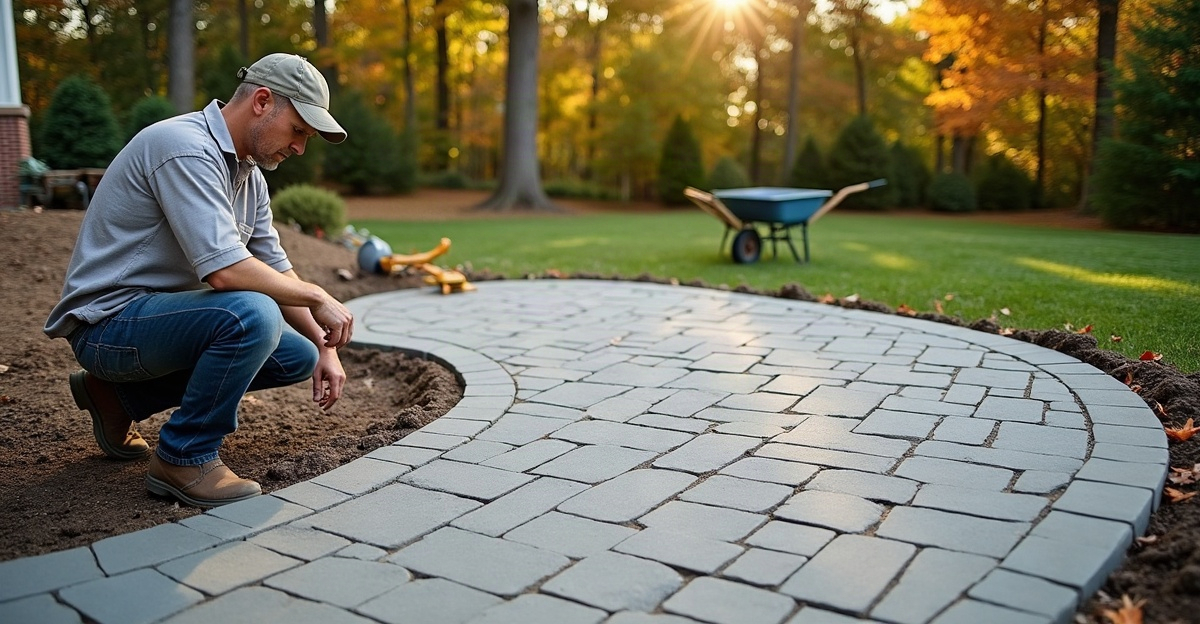
A paver patio vs. concrete decision depends on budget, design goals, drainage conditions, maintenance expectations, and future expansion plans. In Minnesota, we see both surfaces perform well with proper excavation, base preparation, grading, and water control.
Key Takeaways
- Pavers provide greater design flexibility and support localized repairs after settlement. They usually cost more upfront and require periodic joint-sand maintenance.
- Concrete creates a clean, simple patio at a potentially lower initial cost. Cracks and repair areas can remain visible over time.
- Proper drainage, compaction, and base depth matter more than surface material alone. Minnesota freeze-thaw cycles make these installation details essential.
- Pavers work well for curved layouts, borders, fire features, and phased expansions. Concrete suits straightforward patios with a simple slab finish.
- We recommend comparing complete installation scopes. Include excavation, drainage, edge restraints, base materials, and grading instead of judging costs by the visible finish alone.
The Quick Answer: How Pavers and Concrete Compare
Pavers and concrete can both make excellent patios, so neither material is automatically better. In a paver patio vs. concrete decision, the right fit depends on budget, preferred appearance, site conditions, drainage, expected use, maintenance expectations, and plans for future changes.
For homeowners, property managers, and small business owners in Shakopee and nearby Scott, Carver, Dakota, and Hennepin Counties, installation quality matters as much as the surface material. A well-built patio starts with correct excavation, base preparation, grading, and water management.
| Consideration | Paver Patio | Concrete Patio |
|---|---|---|
| Upfront investment | Typically involves higher labor and material costs. | May offer a lower upfront investment for a simple, straightforward layout. |
| Repairability | Individual pavers can often be lifted and reset after the base is corrected. | Cracks may be sealed or patched, though repairs can remain visible. |
| Minnesota freeze-thaw performance | Performs well with proper excavation, base preparation, grading, drainage, and installation. | Performs well with proper design, drainage, curing, and installation practices. |
| Maintenance | Needs cleaning, joint material upkeep, and occasional resetting when needed. | Needs cleaning, crack monitoring, and appropriate sealing or repairs when needed. |
| Design flexibility | Offers patterns, colors, borders, textures, curves, and phased expansion options. | Provides a clean, minimal, monolithic appearance. |
| Drainage considerations | Requires sound base drainage and slope to avoid settlement and washed-out joints. | Requires correct slope and runoff control to protect the slab and nearby structure. |
| Ideal use cases | Fits projects that prioritize repairability, detailed design, and future additions. | Fits projects that favor a simple slab appearance and a potentially simpler initial project. |
The paver vs. concrete patio choice should begin with the site, not a material sample. Water movement, existing grades, access for equipment, soil conditions, and the patio’s connection to the home all affect the recommended approach. Clay or shifting soils may be present on some local properties, but each site should be assessed individually rather than based on assumptions.
Minnesota Weather, Drainage, and Installation Quality Matter Most
Minnesota patios deal with frost heave, repeated freeze-thaw cycles, spring snowmelt, heavy rain, snow shovels, plows, and deicing products. Those conditions can expose shortcuts that may not be obvious during the first season.
A patio needs enough excavation depth for its intended use and local conditions. It also needs a properly compacted, well-draining base. The finished surface should be graded to direct water away from the home, with a clear plan for where runoff will go after it leaves the patio. This work helps protect the patio, foundation area, lawn, and adjacent hardscape.
Paver patios need secure edge restraints to keep the field of pavers in place. They also need suitable jointing material to support the surface and limit joint washout. If the base is shallow, poorly compacted, or unable to drain, pavers can settle, shift, and develop uneven areas. Joint material can also wash out after heavy runoff.
Concrete requires the right mix, reinforcement or control-joint plan, curing process, and installation practices. Properly installed concrete can perform well for many years. Cracking is common over time, especially in a climate with seasonal movement, but a correctly placed control joint helps manage where cracks may occur. It does not guarantee a crack-free slab.
Visible symptoms rarely tell the entire story. A low paver area, an opening joint, a slab crack, or water ponding may point to a drainage or base problem below the surface. It is generally better to fix the underlying cause instead of covering the symptom with a quick patch.
A thoughtful patio design plan accounts for drainage before construction begins. In some yards, steps, grade changes, or hardscape construction work may be necessary to create a stable, usable patio area.
Durability, Repairs, and Maintenance Over Time
A concrete vs. paver patio comparison should consider how each surface responds to age, movement, and repair needs. Neither option is maintenance-free, and neither material removes the need for proper drainage.
Pavers have a practical advantage when localized settlement occurs. A contractor can often lift the affected pavers, correct the base, add or replace bedding material, and reset the same units. Keeping a small supply of extra pavers from the original installation can make future matching easier. This repair method can avoid replacing the full patio surface.
Concrete repairs work differently. Small cracks may be sealed to limit moisture entry, while patches can address localized damage. Even well-done patches can remain visible because color, texture, and weathering change over time. Major settlement or widespread cracking may call for partial removal or full slab replacement. Control joints are useful, but they do not eliminate future cracking.
Paver maintenance includes periodic cleaning, weed control, and replenishing joint sand or polymeric sand as needed. Some patios may also need occasional resetting in isolated areas. Sealing can be an option depending on the paver product and the desired finish, although it is not required for every installation.
Concrete maintenance includes cleaning, monitoring cracks, sealing cracks where appropriate, and resealing when the product or system calls for it. Drainage concerns deserve prompt attention, especially where water collects along an edge or near the house.
Winter care deserves the same level of thought. Both materials need snow and ice practices suited to their condition and finish. Follow manufacturer guidance for deicing products rather than assuming one product is safe for every paver or concrete surface. Metal shovels, aggressive scraping, and improper plow use can also damage edges and finished surfaces.
For projects with walkways, seat walls, or grade changes, an integrated outdoor living plan helps prevent disconnected repairs and mismatched materials later.
Appearance, Everyday Use, and Future Expansion
A patio serves as a daily-use surface and a long-term part of the property’s appearance. The best material is the one that fits the architecture, intended use, and future plans. It is not always the most expensive option.
Pavers offer a broad range of patterns, colors, borders, textures, and laying styles. They work especially well with curved layouts, walkways, fire pits, seating walls, and patios that may grow in phases. A paver field can often connect naturally to a future path, grill station, or expanded gathering space.
Concrete creates a cleaner, more minimal look. A simple rectangular or geometric slab can suit modern homes, smaller patio areas, and projects that call for a straightforward surface. For some properties, that simplicity is exactly the right answer.
Before choosing between a paver patio and concrete patio, consider furniture placement, chair stability, grilling areas, foot traffic, accessibility, and transitions from doors or walkways. A patio with an outdoor kitchen, fire feature, or seating wall needs clear circulation space and a layout that supports how the area will be used.
Pavers often make phased projects easier. A homeowner may begin with a patio, then add a walkway, wall, or landscape fire feature later. Concrete can also support staged improvements, but matching new slabs to existing concrete may be more noticeable because of aging and color variation.
For larger entertaining areas, it is also important to plan room for cooking, dining, and seating. An outdoor kitchen area needs a stable surface, practical access, and enough space around appliances and seating.
Upfront Cost vs. Long-Term Value
Concrete may be a good fit for a simple patio with a potentially lower initial investment. Pavers often cost more at the start because installation includes separate materials, base construction, edge restraints, and additional labor for placement and finishing.
The lower first price does not always create the lower long-term cost. A patio that needs major drainage correction, extensive repair, or replacement later can become costly regardless of surface material. Compare full installation scopes instead of comparing only the visible finish.
Total project cost changes with patio size, site access, demolition needs, excavation, base depth, drainage corrections, grading, pattern complexity, steps, retaining walls, fire features, outdoor kitchens, and material selection. A lower proposal may leave out important work such as adequate excavation, compaction, drainage planning, or edge restraint.
Pavers can bring long-term value through repairability and design flexibility. If one area settles, the repair may remain localized. Concrete remains a sensible long-term option when the layout is straightforward and the slab is properly designed, installed, drained, and maintained.
Neither surface can compensate for a weak base. Pavers still need stable support to remain level, while concrete still needs proper drainage and joint planning to manage movement over time.
Choose the Material That Fits Your Property—and Questions to Ask First
Decision Guide and Contractor Questions
Pavers are often the stronger choice in these situations:
- Repairability and the ability to correct localized settlement are priorities.
- More patterns, colors, borders, curves, or textures are desired.
- The patio may be expanded or connected to walkways and outdoor features in phases.
- Smooth integration with fire pits, seating walls, outdoor kitchens, or curved layouts is important.
- Periodic joint maintenance, cleaning, and occasional resetting are acceptable.
Concrete may be a good fit in these situations:
- A simple slab appearance or a clean, minimal, monolithic look is preferred.
- The project has a straightforward layout.
- A potentially simpler initial project and tighter upfront budget are priorities.
- There is an understanding that cracking is common over time and visible repair or eventual slab replacement may be needed.
- Drainage will be maintained, cracks monitored, and appropriate snow and ice practices used.
Before hiring any patio contractor, ask clear questions about the work below the finished surface:
- How deep will excavation be for this specific site?
- What base material and compaction process will be used?
- How will water drain away from the home and patio?
- How will edges, joints, transitions, and nearby grade changes be handled?
- What maintenance should be expected in Minnesota?
- How are settling, cracking, and warranty concerns handled?
- Can the patio be repaired or expanded later?
A site-specific assessment gives property owners the clearest answer. Outdoor Oasis can review drainage, patio layout, material options, and the installation approach that makes sense for the property. Local property owners are invited to request a patio consultation when they are ready to discuss the project in practical detail.