

What Are the Best Outdoor Kitchen Ideas for Cold Climates?
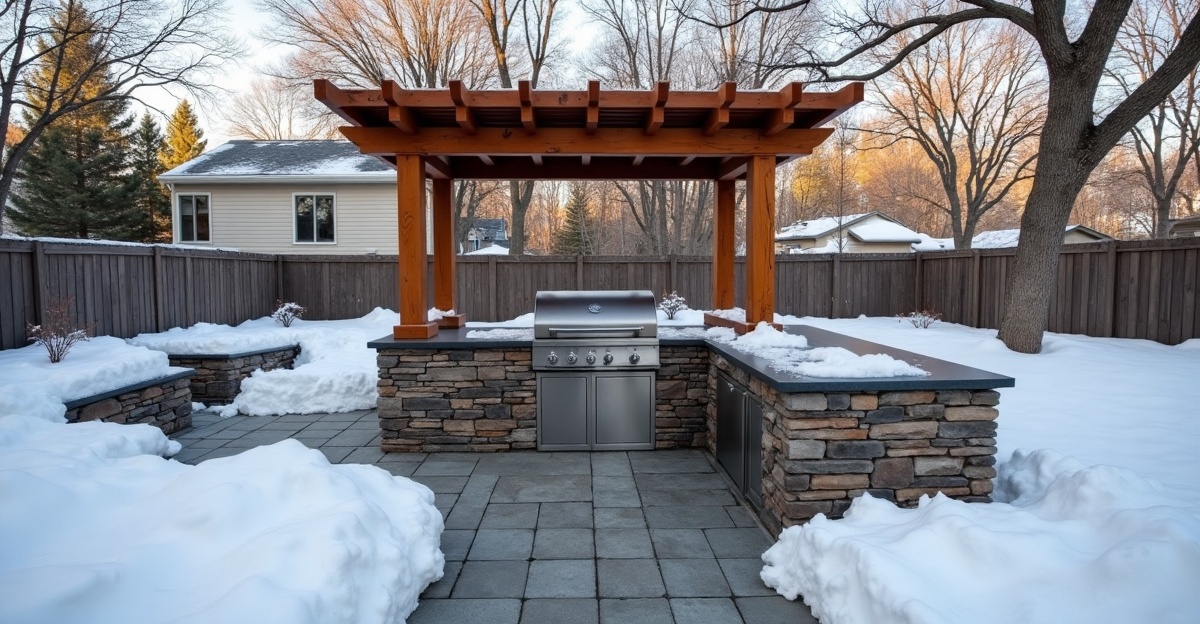
Designing for cold climates demands outdoor kitchen ideas Minnesota homeowners can count on through freeze–thaw cycles, deep frost lines, heavy snow loads, and fast spring melt. We focus on frost-protected foundations, long-lasting masonry materials, proper drainage, smart wind-blocking layouts, and appliances we can winterize safely for dependable performance year after year.
Key Takeaways
- We build foundations below Minnesota’s 42–60 inch frost depth and prioritize proper base compaction to prevent heaving and cracking.
- We plan drainage with sloped surfaces and controlled runoff to protect cabinets, footings, and patios from damage during spring melt.
- We select durable, freeze–thaw-rated materials such as reinforced masonry cores, sealed natural stone, high-quality concrete, and 304 or 316 stainless steel.
- We use wind-blocking layouts, snow-rated roof structures, and strategic placement near the home to improve comfort and extend seasonal use.
- We install gas, electric, and water lines with cold-weather planning in mind, including accessible shutoffs and complete winterization procedures.
Designing for Minnesota Winters: What Changes in a Cold-Climate Outdoor Kitchen
Outdoor kitchen ideas Minnesota homeowners consider must account for serious seasonal extremes. Subzero winters, 90°F summer days, heavy snow, and spring melt all affect how an outdoor kitchen performs over time.
Freeze–thaw cycles are the biggest concern. Water seeps into small cracks in porous materials. Once temperatures drop, that moisture freezes and expands. Repeated cycles cause cracking, shifting, and long-term structural damage. Materials and installation methods that work in milder states often fail here within a few seasons.
Frost depth in Minnesota commonly reaches 42–60 inches. If foundations don’t extend below that depth, frost heave can lift islands, patios, and support posts. We’ve seen beautiful kitchens tilt and separate simply because the base wasn’t built below the frost line.
Snow load also matters. Roof structures, pavilions, and pergolas must be framed to carry accumulated snow weight. What looks solid in summer can sag or fail in late January if it wasn’t engineered for winter.
Spring runoff creates another issue. Snow melts fast, and water needs a clear path away from cabinets and foundations. Patios and cooking areas require proper slope and drainage planning. Standing water around cabinet bases shortens the life of almost every material.
Many outdoor kitchen ideas Twin Cities homeowners find online don’t account for these wide temperature swings. A kitchen designed for a southern climate might look good in photos, but it won’t hold up here without structural changes. Climate-aware outdoor kitchen design MN protects long-term value and prevents costly repairs down the road.
The Foundation Comes First: Footings, Base Prep, and Drainage
The structure under the kitchen matters more than the finishes on top. We focus on what’s below grade before discussing countertops or appliances.
Permanent masonry islands and structures need frost footings that extend 42–60 inches deep in Minnesota. That depth prevents heaving during winter and shifting during thaw. Skipping this step almost always leads to movement and cracking.
Under patios and outdoor cooking space MN layouts, we install a properly compacted gravel base. Compaction reduces settling and helps manage drainage. A stable base keeps pavers aligned and concrete from separating.
Pavers and poured concrete each require a different approach. Pavers rely on layered base preparation, edge restraints, and joint stabilization. Sealing helps reduce moisture penetration in freeze–thaw conditions. Poured concrete must include proper control joints and often benefits from sealing as well. Without drainage layers and thoughtful installation, both systems can suffer in winter.
Drainage planning is non-negotiable. We slope surfaces away from the home and channel spring runoff away from cabinet bases and footings. Pooling water around stone veneer or metal cabinetry accelerates deterioration.
Utility planning also requires cold-climate awareness. Gas, electric, and water lines are installed below the frost line where required. Shutoffs should be accessible inside the home. Pipes exposed to freezing conditions will eventually fail if they aren’t addressed correctly.
Homeowners sometimes focus on cosmetic upgrades first. We encourage the opposite. Structural integrity, base preparation, and drainage protect the investment. Finishes can always be upgraded later, but repairing a failed foundation is far more involved.
For projects that require extensive base work and masonry, we often integrate ideas from our hardscape construction services to ensure every surface is built for Minnesota conditions.
Best Materials for a Durable Outdoor Kitchen Design MN
Material selection plays a major role in long-term performance. Outdoor kitchen design MN requires products that can handle moisture, freezing, and rapid temperature swings.
Masonry construction typically performs better over time than lightweight prefab kits. Concrete block wrapped in stone veneer creates a strong core that resists movement when properly installed on frost footings. Prefabricated systems can work, yet they must be installed on solid bases and protected from moisture intrusion.
Natural stone and concrete block hold up well in freeze–thaw climates when sealed and detailed correctly. Proper flashing, drainage gaps, and high-quality mortar make the difference between a kitchen that lasts and one that starts cracking within a few winters.
Countertops need similar consideration. Granite is a strong option if sealed correctly and maintained. Poured-in-place concrete works well too, provided the mix is designed for exterior use and sealed properly. We avoid porous or interior-rated materials that aren’t built for freezing and thawing cycles.
Appliance construction matters here more than in warmer regions. For stainless steel, 304 grade should be the minimum for outdoor use. In the Twin Cities area, 316 stainless steel offers higher corrosion resistance, especially near moisture and road salt exposure. Lower-grade stainless often shows rust spots quickly in our climate.
Underfoot, sealed pavers often outperform basic concrete slabs in outdoor kitchen ideas Minnesota projects. Pavers allow flexibility and easier sectional repair. Concrete slabs can work, but cracking is more visible and harder to correct.
We steer clear of materials that aren’t suitable for freeze–thaw conditions unless there’s a clear protection plan in place. Durability always takes priority over novelty.
Smart Layouts That Block Wind and Capture Heat
Layout influences comfort just as much as materials. Wind exposure is one of the biggest challenges in Minnesota.
We often position the kitchen using the home or garage as a natural windbreak. Low masonry walls can also block prevailing winds and create a more comfortable cooking zone. L-shaped and U-shaped layouts help enclose the space, retaining warmth while improving workflow.
Roof structures extend seasonal use. A full pavilion provides overhead protection and allows framing to be engineered specifically for snow load. Pergolas offer partial shelter and visual structure, but they provide limited snow protection unless reinforced for heavier accumulation.
Traffic flow affects snow drifting. Strategic placement of walkways and open edges reduces wind patterns that push snow directly into the cooking area. Southern exposure can also help capture natural warmth and light during cooler months.
Connection to the indoor kitchen is another practical detail. Short, direct access makes winter grilling far easier. An outdoor cooking space MN homeowners can reach quickly without trekking across deep snow encourages more frequent use.
For comprehensive planning, we often incorporate these decisions into our outdoor living design process so layout, structure, and materials work together from the start.
Appliances and Plumbing: What Actually Works in Cold Weather
Appliance choice determines whether the space functions smoothly in spring and fall.
Gas grills tend to be more reliable in cold weather. They heat faster and maintain temperature better than many alternatives. Charcoal grills remain dependable but require more patience in freezing conditions. Pellet grills can struggle in subzero temperatures without insulation blankets and careful monitoring.
Outdoor-rated refrigeration units are essential if a fridge is included. Even then, units often require shutdown and cleaning before deep winter arrives. Leaving a refrigerator running in extreme cold can shorten its lifespan.
Water lines demand careful winterizing. A proper setup includes interior shutoff valves and the ability to blow out lines before winter. Without that step, frozen pipes can burst and cause serious repairs in spring.
Storage also matters. Grill covers rated for snow load help, yet heavy accumulation should still be cleared off. Built-in cabinetry must be sealed and protected from ice buildup.
Some homeowners expect year-round use without adjustments. In Minnesota, “year-round” means accepting snow removal, routine maintenance, and often supplemental heat. A clear plan from the start sets realistic expectations.
Extending the Season Without Overspending
In our area, three-season use typically runs from April through October with minimal supplemental heat. Year-round use requires greater investment and ongoing care.
To extend comfort, homeowners often consider:
- Patio heaters for targeted warmth in early spring and late fall.
- Built-in fireplaces or gas fire features for consistent radiant heat.
- Radiant overhead heaters in covered pavilion structures.
- Partially enclosed pavilions that reduce wind exposure.
Fire features are especially effective in cold climates. Integrated correctly, they provide warmth and create a natural gathering point. We frequently combine kitchens with elements from our landscape fire features projects to extend usable time outdoors.
Budget priorities should stay practical. We recommend focusing first on structural base work, durable materials, and shelter. Luxury add-ons can be phased in later. A well-built outdoor kitchen ideas Twin Cities project protects resale value and reduces long-term maintenance concerns.
Snow management is part of the equation. Clear access paths and thoughtful plowing plans make winter use realistic. Some homeowners coordinate outdoor spaces with a broader property plan that includes professional snow removal services to protect surfaces and maintain safe access.
For homeowners in Shakopee and across the metro, we encourage careful planning. Outdoor kitchen ideas Minnesota should make sense for the specific yard, exposure, and budget. Simple, well-built spaces often outperform oversized designs that ignore climate.
A practical outdoor cooking space MN families can use comfortably for years always beats a flashy setup that struggles after a few winters. With the right base, materials, and layout, an outdoor kitchen becomes a dependable extension of the home rather than a seasonal experiment.