

What Are the Best Backyard Lighting Ideas for Minnesota Homes?
Do not modify or enhance the wording; the text must remain identical except for the HTML markup. Do not convert the first sentence or introductory text into a heading — it must remain a normal paragraph (<p>).
Choosing the right backyard lighting ideas Minnesota homeowners rely on requires smart planning. We design for freeze-thaw cycles, deep snow, short winter days, and long summer evenings. The best results combine climate-rated fixtures, integrated hardscape lighting, and layered safety illumination. This approach improves usability, longevity, and year-round visibility.
Key Takeaways
- Minnesota’s climate requires cold-rated, moisture-resistant fixtures with proper drainage and stable installation to prevent frost heave and wiring damage.
- Integrated patio and retaining wall lighting delivers subtle, durable illumination that improves safety without glare or a commercial feel.
- Pathway, step, and deck lighting must prioritize tread visibility and downward-directed light to reduce fall risk on snow and ice.
- Garden and tree lighting should highlight four-season structure, using secure installation and controlled uplighting that withstands winter conditions.
- We plan transformer capacity, wiring routes, and fixture placement early—especially during patio or wall construction—to improve long-term reliability and allow room for expansion.
Backyard Lighting That Actually Works in Minnesota’s Climate
Minnesota weather doesn’t give outdoor lighting a break. Between freeze-thaw cycles, heavy snow accumulation, and soil movement, backyard fixtures take more abuse here than in most states.
We also deal with shorter winter daylight hours that push outdoor routines into darkness, while long summer evenings keep patios and decks active well past dinner. That contrast shapes the best backyard lighting ideas Minnesota homeowners choose. Lighting has to handle deep cold, constant moisture shifts, and months of snow cover.
Well-planned lighting improves usability and visibility year-round. During summer, it stretches time outdoors. During winter, it increases safety around icy pavers, steps, and elevation changes. A poorly lit yard becomes a hazard when snow hides trip points or ice builds up along retaining walls.
Quality matters. Cheap solar stake lights often fail during cloudy winter months and disappear under snow accumulation. They may look simple upfront, but they rarely hold up through repeated freeze-thaw cycles. Thoughtful outdoor lighting MN ideas focus on durability, safety, and subtle design that lasts for years, not a single season.
Climate-Smart Planning: What to Consider Before Installing Lighting
The strongest lighting systems start with planning that respects Minnesota’s climate.
Most residential systems use low-voltage landscape lighting because it’s safer and offers flexibility in layout and expansion. That’s a smart foundation, but materials and installation matter just as much. Fixtures should be rated for cold climates and constant moisture exposure.
Water control is critical. Proper drainage solutions around in-ground fixtures prevent pooling that turns into ice damage. Without drainage, water seeps into connections, freezes, and expands. Over time, that movement loosens fixtures and stresses wiring.
Soil movement is another factor. Freeze-thaw cycles cause frost heave, which can push fixtures out of alignment or tilt path lights. We account for that by stabilizing bases and protecting wiring from shifting soil and root growth.
Snow removal considerations often get overlooked. Snow plows and blowers can shear off low fixtures if placement isn’t planned carefully. We avoid setting path lights where snow banks pile up or equipment regularly passes.
Lighting also works best when coordinated with other improvements. If we’re building a patio, correcting drainage, or installing retaining walls, that’s the time to plan conduit runs and fixture locations. Integrating lighting during broader outdoor living construction reduces disruption later and creates a cleaner finish.
Effective outdoor lighting MN ideas always reflect local conditions. Generic national advice rarely accounts for frost depth, plowed snow piles, or heavy spring melt. In Minnesota, those details dictate long-term performance.
Patio and Retaining Wall Lighting for Everyday Use
Patios serve as the anchor for most backyards, so they deserve lighting that feels natural and balanced.
Patio accent lighting should create ambient light without harsh glare. The goal isn’t to flood the space. It’s to provide soft illumination that supports conversation, dining, and safe movement. Patio lighting ideas Minneapolis homeowners favor are usually integrated into the hardscape rather than added later as surface fixtures.
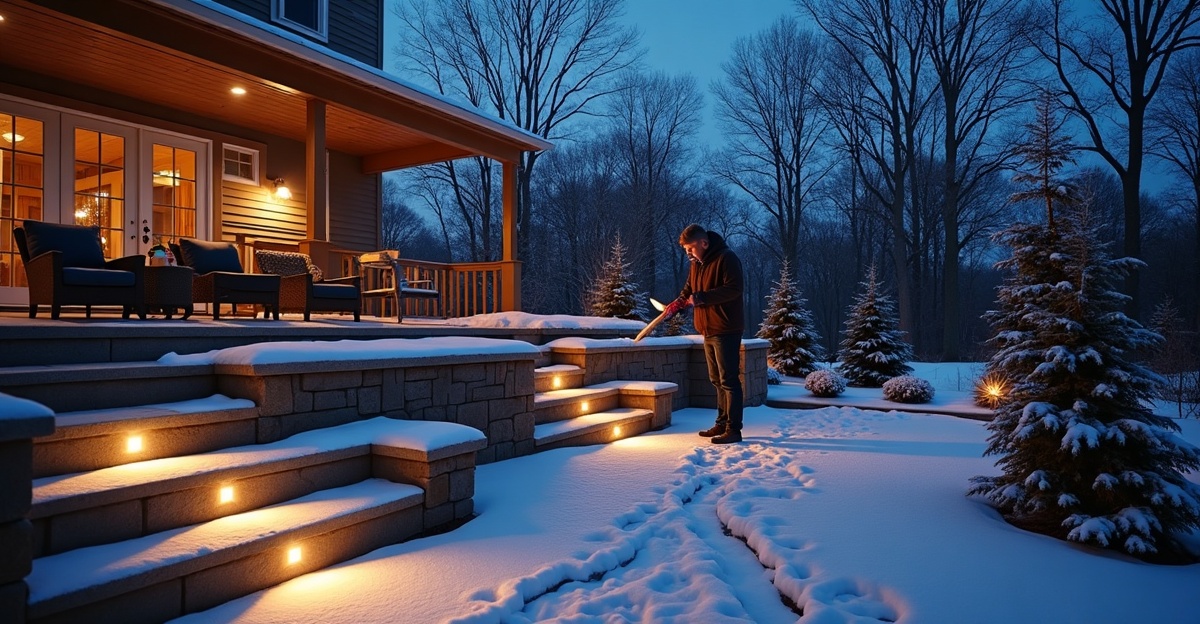
Retaining wall integrated lighting works especially well in Minnesota yards with grade changes. Under-cap wall lighting provides subtle downward illumination that reduces shadows along seating walls and clearly defines edges. It adds atmosphere while improving safety.
Built-in lighting holds up better through freeze-thaw cycles. When we plan lighting as part of outdoor living design, we can hide wiring, protect connections, and coordinate fixture placement with seating and traffic flow.
Paver patios are ideal for this approach. During installation of paver patios, we can plan conduit paths underneath the surface. That avoids cutting into finished work later. The result looks intentional and stays protected beneath stable base layers.
Among popular backyard lighting ideas Minnesota homeowners choose, subtle retaining wall integrated lighting remains a top performer. It creates depth and usability without making the backyard feel commercial or overly bright.
Pathway, Step, and Deck Lighting for Safety Year-Round
Safety drives many lighting decisions in Minnesota.
Pathway lighting defines walking routes clearly, even when snow partially covers edges. Lights spaced correctly highlight curves and transitions. That’s especially important on uneven grades or long side-yard transitions from driveway to backyard.
Step lighting reduces fall risk during early sunsets in late fall and winter. With shorter winter daylight hours, stairs often sit in full darkness during dinner time or earlier. We focus light directly on treads so depth and edge lines stay visible.
Deck stair tread lighting performs better when built into risers rather than surface-mounted. Integrated fixtures protect against snow removal and foot traffic while creating consistent illumination across every step.
Winter safety lighting works best when it avoids glare on snow. Bright white floodlights bouncing off snow can reduce visibility instead of improving it. Softer, shielded fixtures directed downward provide clearer sightlines and greater comfort.
Homes with multiple elevation changes benefit most from a layered approach:
- Pathway lighting along primary routes.
- Step lighting on every stair run.
- Subtle perimeter lighting to define grade shifts.
- Controlled illumination near drive-to-backyard access points.
With the right plan, these outdoor lighting MN ideas improve safety immediately while enhancing curb appeal.
Garden and Tree Lighting That Withstands Minnesota Winters
Landscape lighting shouldn’t disappear when the flowers do.
Garden lighting inspiration often focuses on summer color, but in Minnesota we design for all four seasons. Mature trees, stone features, and architectural plants carry visual interest even during dormancy. Snow-covered branches can look striking with well-placed tree uplighting.
Fixtures need secure installation to handle frost heave. Proper staking and stabilized bases prevent shifting as soil expands and contracts. Drainage below the fixture reduces ice buildup around connections.
Tree uplighting works best when it creates contrast and shadow rather than overpowering brightness. Subtle beams up the trunk and into the canopy provide depth without overwhelming the yard. That layered approach pairs naturally with patio lighting and retaining wall integrated lighting.
Avoid purely decorative trends that ignore durability. Lightweight fixtures with exposed wiring rarely survive repeated freeze-thaw cycles and heavy snow accumulation. Lasting backyard lighting ideas Minnesota homeowners appreciate rely on solid materials and careful placement.
When coordinated properly, garden and tree lighting complete the look. Patios, walkways, and planting beds all feel connected through balanced illumination.
Maintenance, Expansion, and When to Bring in a Professional
A well-built system requires minimal upkeep, but it still needs attention.
LED bulbs offer long life, especially in cold Minnesota weather conditions. Transformer capacity should be planned from the start so additional fixtures can be added later without overload. If expansion is likely, we size wiring and transformers accordingly.
Durable fixtures outperform cheaper alternatives. Housings should resist moisture intrusion, and connections must remain secure through freeze-thaw cycles. That’s where long-term value shows up. Fewer replacements mean lower overall cost and less disruption.
Some situations call for professional guidance:
- Uneven grades or standing water that require drainage corrections.
- Complex wiring paths around large patios or mature trees.
- Integrating lighting into a new retaining wall or paver patio project.
- Replacing outdated or failing systems.
Lighting may look simple, but it’s often part of larger outdoor living construction. When coordinated early, it blends seamlessly into stonework, walls, and decks.
We approach each lighting consultation with a practical mindset. We focus on what fits the property, how the yard gets used, and what will last through Minnesota winters. There’s no pressure to overbuild. We recommend what makes sense.
Homeowners in Shakopee and throughout Scott, Carver, Dakota, and Hennepin Counties can explore options through our landscape lighting services or reach out directly through our contact page. From initial layout to final walkthrough, we stay hands-on and accountable, building lighting systems that work as hard as the homes they surround.