

What Is the Best Way to Install Landscape Lighting?
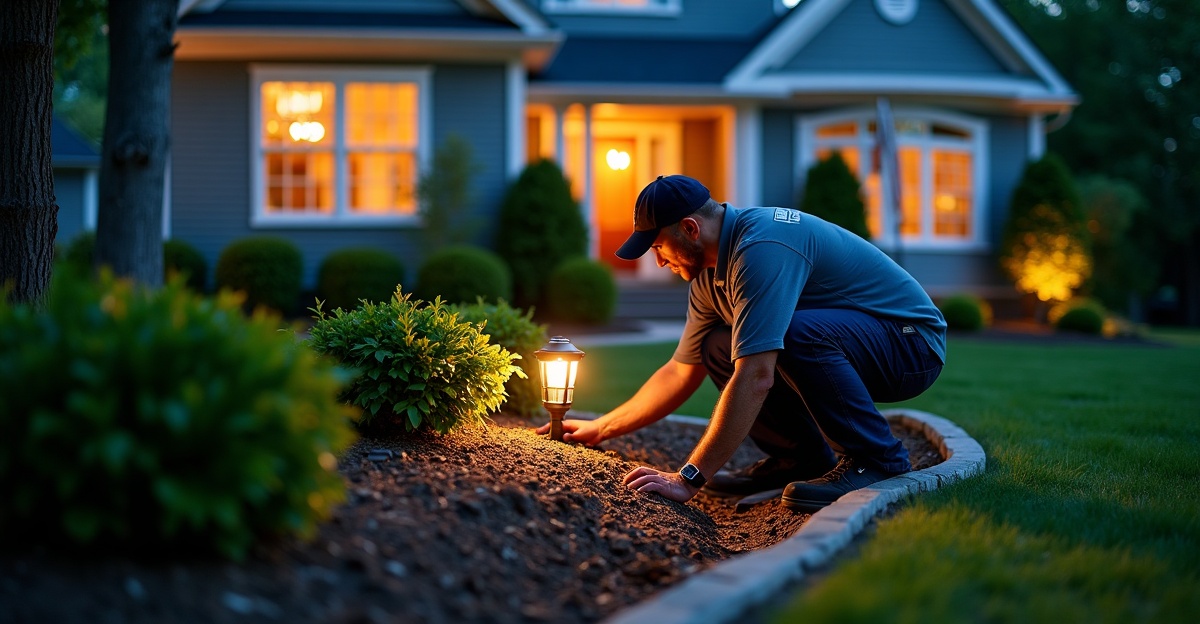
The best way to install landscape lighting starts with a clear plan that balances safety, visibility, accent lighting, and long-term durability, especially in Minnesota’s freeze-thaw climate. We approach every project with a strategy that supports both performance and curb appeal. This landscape lighting installation guide explains how thoughtful design, accurate load calculations, smart fixture selection, proper trenching, and careful nighttime adjustments work together to deliver a system that performs year-round.
Key Takeaways
- A complete system includes quality fixtures, low-voltage wiring, a properly sized transformer, and smart or timed controls planned around safety, function, and accent goals.
- Thoughtful layout and beam selection prevent glare, over-lighting, and the “runway” effect while ensuring even, natural coverage.
- Correct load calculations and transformer sizing reduce voltage drop, allow for future expansion, and protect fixture lifespan.
- Proper trenching depth, sealed connections, and placement that accounts for snow and frost heave remain essential in Minnesota soils.
- Nighttime testing, seasonal control adjustments, and ongoing maintenance keep the system balanced, efficient, and dependable over the long term.
What a Proper Landscape Lighting System Really Includes
A complete lighting system starts with a clear plan and the right components. Every quality setup includes fixtures, low-voltage wiring, a properly sized transformer, and either a timer or smart control. Careful placement matters just as much as the hardware.
A solid landscape lighting installation guide should cover more than where to place a few path lights. It should address safety, function, and long-term durability. The primary purposes of landscape lighting are straightforward:
- Safety: illuminate walkways, steps, and elevation changes.
- Visibility: light up driveways, entries, and transitions.
- Accent: highlight architectural details, stonework, and trees.
- Usability: extend time on patios and outdoor living areas.
More fixtures don’t mean better results. Good lighting relies on balance. We aim for even coverage without glare. Harsh brightness can wash out features, irritate neighbors, and make outdoor spaces feel uncomfortable.
Minnesota adds real challenges. Snow cover can bury low fixtures. Frost heave can shift poorly installed lights. Freeze and thaw cycles put stress on shallow connections. A quick weekend project may work for a short walkway, but larger properties require thoughtful planning and proper installation. Most full-property systems take more time and coordination than many expect, especially if we want them to last.
Step One: Planning and Design for Safety, Function, and Long-Term Value
Every project starts with a walk-through. We identify dark areas, trip hazards, steps, grade changes, and focal points that deserve attention. Trees, stone pillars, and entryways often benefit from subtle accent lighting.
Before purchasing fixtures, we define the goal. Are we improving safety along a long driveway? Are we highlighting mature trees? Are we creating a more usable patio space? Clear priorities prevent impulse buying and cluttered layouts.
Spacing makes a big difference. Evenly spaced lights in a straight line can create a runway effect. Instead, we stagger fixtures or offset them slightly. That approach looks natural and adds depth.
Brightness and beam angles also matter. High-lumen fixtures can overpower small spaces. Narrow beams can spotlight a trunk or column, while wider beams gently wash a wall. We match output to the feature being lit so we avoid over-lighting.
Load calculation and transformer sizing are equally important in a proper lighting system setup outdoor. Overloading a transformer can shorten fixture life and cause dimming at the far end of a run due to voltage drop. Undersizing limits future expansion. We calculate the expected load and allow capacity for growth.
Communication sets the tone for the project. We outline scope, fixture types, layout, and wire paths. A nighttime adjustment visit should be part of the plan. Lights almost always need fine-tuning after sunset.
Choosing the Right Fixtures and Mapping the Layout
Different areas call for different fixture types.
Path lights guide movement along walkways and driveway edges. Uplights accent trees, stonework, and architectural details. Downlights, mounted higher, create a soft “moonlight” effect across patios or planting beds. Step lights improve safety on retaining walls and stairways.
Fixture quality matters in Minnesota’s climate. We look for corrosion-resistant materials and sealed connections that stand up to moisture and road salt. Cheap fixtures may work for a season or two, but they often fail after repeated freeze and thaw cycles.
Layout planning must account for the future. Wiring routes should avoid planned patios, retaining walls, irrigation lines, and planting beds. We often recommend integrating lighting into larger projects. During hardscape construction, we can conceal wiring beneath pavers and through walls. That approach protects the system and creates a cleaner look.
When we handle broader outdoor living projects, lighting becomes part of the overall design rather than an afterthought. A thoughtful plan during outdoor living design ensures the lighting complements seating areas, fire features, and plantings.
Common DIY mistakes show up across Minnesota. We see too many lights packed into one area, exposed wiring at mulch edges, and fixtures placed where snow piles or plow paths will damage them. Mapping the layout carefully prevents these issues.
Trenching, Wiring, and Minnesota Soil Conditions
Low-voltage systems require shallow trenching, but “shallow” doesn’t mean careless. Wires need consistent burial depth to protect them from lawn equipment and foot traffic.
Minnesota soil presents unique challenges. Clay-heavy soil retains moisture. Poor drainage increases stress on connections. Frost depth shifts and freeze-thaw cycles can lift fixtures out of alignment. Snow stacked along driveways compresses soil and strains wiring.
Solid, weather-resistant connections reduce maintenance problems. Proper burial depth protects lines from temperature extremes and accidental cuts. We also plan wire runs to minimize voltage drop, which can cause the last fixtures on a line to appear dimmer than the first.
These considerations matter in any outdoor lighting installation MN homeowners expect to last. A system that functions well in summer must also perform in January. Care during trenching and connection work keeps service calls to a minimum.
Timers, Smart Controls, and Seasonal Adjustments
Controls bring the system together. Photocells activate lights at dusk. Timers adjust shutoff times. Smart controls allow seasonal programming as daylight hours shift dramatically in Minnesota.
We often set systems to extend operation during longer winter nights and reduce runtime during bright summer evenings. Programmable options help homeowners who travel or prefer automatic adjustments.
Nighttime testing is essential. Fixtures get aimed and re-aimed after dark. Small adjustments reduce glare into windows and prevent light spill onto neighboring properties. Final tuning ensures the system looks balanced from the street and the patio.
LED fixtures support energy efficiency and long service life. We focus on right-sizing the system rather than exaggerating savings. Proper design keeps operating costs reasonable without sacrificing performance.
For those exploring options, information about landscape lighting installation can provide a clearer sense of what a professionally planned system includes.
DIY vs. Hiring a Professional: When to Search for Landscape Lighting Installers Near Me
Small projects can work for experienced DIY homeowners. A short walkway with a few path lights may be manageable with careful planning.
Larger properties or multi-zone systems add complexity. Professional installation brings value in several situations:
- Expansive layouts with long wire runs.
- Multiple lighting zones with separate control needs.
- Integration with patios, retaining walls, or new construction.
- Transformer sizing and load calculations.
- Long-term durability concerns in freeze-thaw climates.
Many homeowners start by searching for landscape lighting installers near me once they realize the scope extends beyond placing a few fixtures.
A reputable contractor in Shakopee and surrounding Scott, Carver, Dakota, and Hennepin Counties should provide a clear proposal and defined scope. Communication should run from the initial consultation through the final walkthrough. Nighttime adjustments should be included. Recommendations should be practical and honest. Upgrades should make sense for the property, not inflate the budget.
Maintenance expectations should also be clear. Systems require periodic lens cleaning, connection checks, and occasional repositioning after frost heave. LED replacements are infrequent but expected over time.
We take pride in staying involved from planning through completion. For homeowners considering a custom plan, reviewing our project gallery can help visualize possibilities. When it makes sense to move forward, a straightforward conversation through our contact page lets us walk the property and discuss realistic options.
Every property is different. The best results come from steady craftsmanship, thoughtful design, and lighting that serves the space without overpowering it.