

Outdoor Upgrade ROI Guide
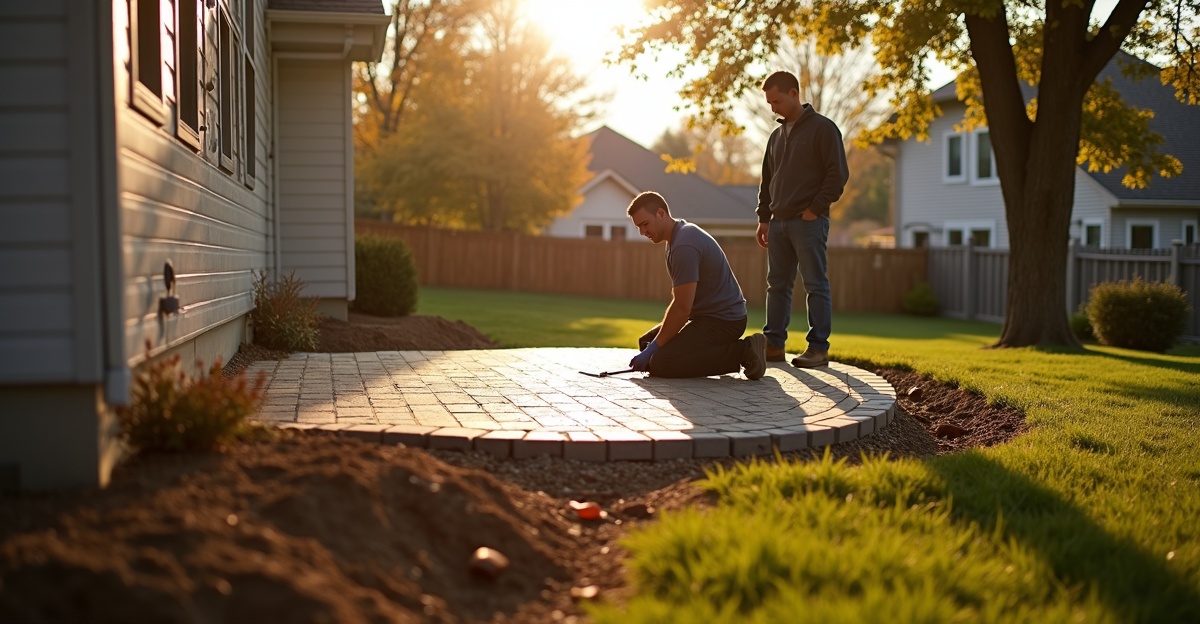
Return on investment outdoor upgrades in Minnesota requires evaluation through both resale value and daily function. Freeze-thaw cycles, heavy snow, and shifting soils shape every exterior project in this region. This Outdoor Upgrade ROI Guide outlines how patios, retaining walls, drainage corrections, and installation standards affect long-term durability, neighborhood appeal, and overall property performance.
Key Takeaways
- ROI includes resale impact and practical gains such as better drainage, functional yard space, and lower maintenance or liability exposure.
- Professionally installed paver patios, engineered retaining walls, and coordinated outdoor plans usually deliver stronger local returns when built for Minnesota’s climate.
- Installation quality below grade—proper base depth, compaction, drainage, and frost-aware construction—protects long-term value more effectively than choosing the lowest upfront price.
- Projects must align with neighborhood standards and property type because overbuilding or underbuilding limits full cost recovery.
- Start with structural priorities like grading and drainage, then phase in visual upgrades to protect the home and strengthen long-term value.
What Return on Investment Really Means for Outdoor Projects in Minnesota
Return on investment outdoor upgrades can be measured in two clear ways. The first is financial resale value. The second is practical, day-to-day value.
On the financial side, we’re looking at how property value outdoor improvements affect sale price and buyer perception. Well-planned patios, retaining walls, and drainage corrections can make a home easier to sell and more competitive within its neighborhood, reflecting findings from real estate research on landscaping projects and resale value. For a deeper look at this connection, our guide on how landscaping increases property value breaks it down further.
Practical value is just as important. Outdoor upgrades often improve:
- Yard usability and livable space
- Drainage and foundation protection
- Reduced maintenance demands
- Snow removal liability reduction
- Long-term landscape durability
In Minnesota, those practical benefits directly affect long-term ROI. Minnesota climate landscaping considerations carry real weight. Freeze-thaw cycles, soil movement, heavy snow loads, spring melt, and shifting subsoils all test the quality of what’s builtin regions with frequent seasonal freeze–thaw cycles in Minnesota. If a patio heaves or a retaining wall shifts after a few winters, any expected patio return on investment Minnesota homeowners hoped for drops quickly.
ROI also shifts depending on your location. Homes in Scott, Carver, Dakota, and Hennepin Counties don’t all follow the same pattern. A patio that feels standard in a newer subdivision may be expected in one neighborhood and considered an upgrade in another. Market timing matters, too.
National averages often overlook what we see locally. They usually don’t account for deep frost lines, expansive soils, and spring saturation. Outdoor home improvements Minnesota homeowners make should be judged through a local lens, not broad national numbers.
We don’t promise a fixed percentage return. The outcome depends on planning, workmanship, and neighborhood fit. The strongest return on investment outdoor upgrades support daily living while fitting the long-term character of the property.
High-Value Outdoor Upgrades That Tend to Deliver Strong Returns Locally
Certain projects consistently deliver strong outdoor living space ROI in our area when built correctly.
Professionally Installed Paver Patios
A properly installed paver patio offers real paver patio value increase, especially in mid- to high-end homes and newer suburban developments. When we prepare a deep, compacted base rated for freeze-thaw conditions, the surface can flex slightly with seasonal movement instead of cracking.
Poured concrete often struggles through repeated freeze-thaw cycles. Cracks develop. Edges sink. Repairs become visible. Pavers, when installed with the right base and edge restraint, allow for targeted repairs without replacing the entire surface.
For growing neighborhoods where backyards start as blank space, patios expand usable square footage outdoors. That added functionality drives outdoor living space ROI and supports resale appeal.
Retaining Walls, Drainage, and Integrated Outdoor Spaces
Retaining wall investment value is especially strong in walkout basements and sloped backyards common around Shakopee and Prior Lake. A well-built wall:
- Controls erosion
- Protects foundations
- Creates flat, functional yard space
- Defines usable zones for seating or play
Landscape drainage solutions Minnesota homeowners install can be just as critical. Correct grading, managed downspout discharge, and French drains where appropriate prevent water from sitting against foundations during spring melt, aligning with best practices for managing drainage around residential foundations. In our climate, drainage fixes often protect the home itself, not just the lawn.
Integrated outdoor spaces outperform piecemeal upgrades. When patios, seating walls, steps, and landscape lighting are planned together, we see higher hardscaping ROI than when features are added one at a time without a master plan.
For homeowners associations, rental properties, or small businesses, reliable winter services contribute to snow removal liability reduction. Heavy snow loads and icy conditions increase exposure to slip-and-fall claims. A consistent service plan protects both people and long-term property value.
Property type matters. Established neighborhoods often need structural corrections and drainage attention first. Newer developments may focus more on building out functional space from scratch. In mid- to high-income homes, we often see clients prioritize quality and durability over quick cosmetic fixes.
Why Installation Quality and Durability Matter More Than Low Upfront Cost
Poor installation lowers ROI quickly.
A patio installed with insufficient base depth will settle. Gaps form. Edges shift. Resetting sections costs money and time. That initial savings disappears fast.
Retaining walls built without proper footings or drainage can lean or fail. Standing water from incorrect grading damages turf and seeps toward foundations. These problems often surface within a few seasons, especially given Minnesota climate landscaping considerations.
Long-term landscape durability depends on preparation below grade. Compacted aggregate, proper geogrid use in walls, frost-aware footings, and correct slope ratios all play a role. Materials also need to handle freeze-thaw stress year after year.
The cheapest bid rarely accounts for 10–20 years of performance. A value-focused approach looks at how the system functions as a whole. If repairs or full replacement are required in five years, any early savings are erased.
Hiring a Shakopee landscaping contractor familiar with local soils, frost depths, and inspection standards makes a difference. Experience in this region means fewer surprises and measurable long-term durability.
We approach projects through coordinated outdoor living design and experienced hardscape construction. When needed, we also manage the full process under full project management so quality stays consistent from excavation to final walkthrough.
How to Evaluate ROI on Your Own Property Before You Build
A clear plan starts with practical questions.
Does the project solve a real issue such as drainage, slope, or unusable yard space? Will the space be used weekly, or only a handful of times each season? How does the finished result compare to neighborhood standards?
Phased planning can help if budget is a concern. Start with structural elements that protect the property. Drainage, grading, and retaining walls come first. Aesthetic elements like fire features or extended seating can be added later.
A full-yard strategy helps avoid rework. Our guide on how to plan a full yard makeover outlines how to think ahead before breaking ground. Matching scope to budget also matters, and our backyard budget planning guide walks through those trade-offs.
Consider a sloped backyard in Prior Lake. Installing a properly engineered retaining wall transforms an awkward hill into usable lawn and patio space, improving retaining wall investment value immediately.
Think about an older patio in Eden Prairie that’s settled after repeated freeze-thaw cycles. Rebuilding with a deeper base and proper compaction improves patio return on investment Minnesota homeowners care about, because stability improves resale perception and daily enjoyment.
The strongest return on investment outdoor upgrades align daily function with long-term resale appeal. Outdoor home improvements Minnesota property owners make should always be weighed against soil conditions, drainage patterns, and frost exposure.
Local Standards, Property Type, and Timing: What Influences Your Long-Term Value
Neighborhood expectations influence property value outdoor improvements more than many realize. In higher-end communities, a basic or unfinished backyard may stand out negatively. In more modest neighborhoods, overbuilding with luxury features that exceed surrounding homes may limit full cost recovery.
Newer developments often start with minimal landscaping. Adding integrated patios and functional zones can elevate the property quickly. Established neighborhoods usually include mature trees, aging structures, and drainage challenges that require correction before aesthetic upgrades make sense.
Timing plays a role as well. Spring melt often exposes grading flaws and water flow issues. Fall planning allows adequate preparation for winter snow removal liability reduction before snow arrives.
Steady, thoughtful investment beats chasing short-lived trends. Durable materials, climate-aware construction, and coordinated design deliver stronger hardscaping ROI over time.
For homeowners in Shakopee and surrounding counties, we’re always willing to walk the property and offer straightforward feedback. A site visit helps clarify what makes sense, what can wait, and what brings the best long-term value. Anyone ready for that next step can reach out through our contact page for a no-pressure consultation focused on practical results.
Frequently Asked Questions
Outdoor upgrades that improve both usability and structural performance typically deliver the strongest return. Projects like professionally installed patios, retaining walls, and drainage improvements increase functional living space while protecting the property from water damage and erosion. These upgrades also enhance curb appeal and buyer perception, making the home more competitive in the local market when it comes time to sell.
Yes, well-built outdoor living spaces can increase property value even in cold climates. In regions with freeze-thaw cycles and heavy snow, buyers often value patios, retaining walls, and proper drainage because they improve yard usability and reduce maintenance problems. When these upgrades are installed with frost-resistant construction methods, they contribute to both resale appeal and long-term durability.
Homeowners can estimate return on investment by comparing project costs with potential resale value and daily benefits. Consider how the upgrade improves yard functionality, reduces maintenance, or solves structural issues such as drainage or erosion. Projects that make the property easier to maintain and more usable year-round tend to provide stronger overall value than purely decorative landscaping.
Yes, addressing drainage and grading first usually protects the long-term value of outdoor upgrades. Poor water management can cause patios to settle, retaining walls to shift, and lawns to develop erosion problems. Correcting these issues before installing hardscaping ensures a stable foundation and prevents costly repairs later, which helps preserve the overall return on investment.
Installation quality plays a major role in the return on investment of outdoor upgrades. Proper base preparation, compaction, drainage systems, and frost-aware construction methods prevent movement and structural failure over time. When hardscape features are installed correctly, they last longer, require fewer repairs, and maintain their appearance, which protects both property value and long-term usability.