

How Do You Maintain a Water Feature in Minnesota Winters?
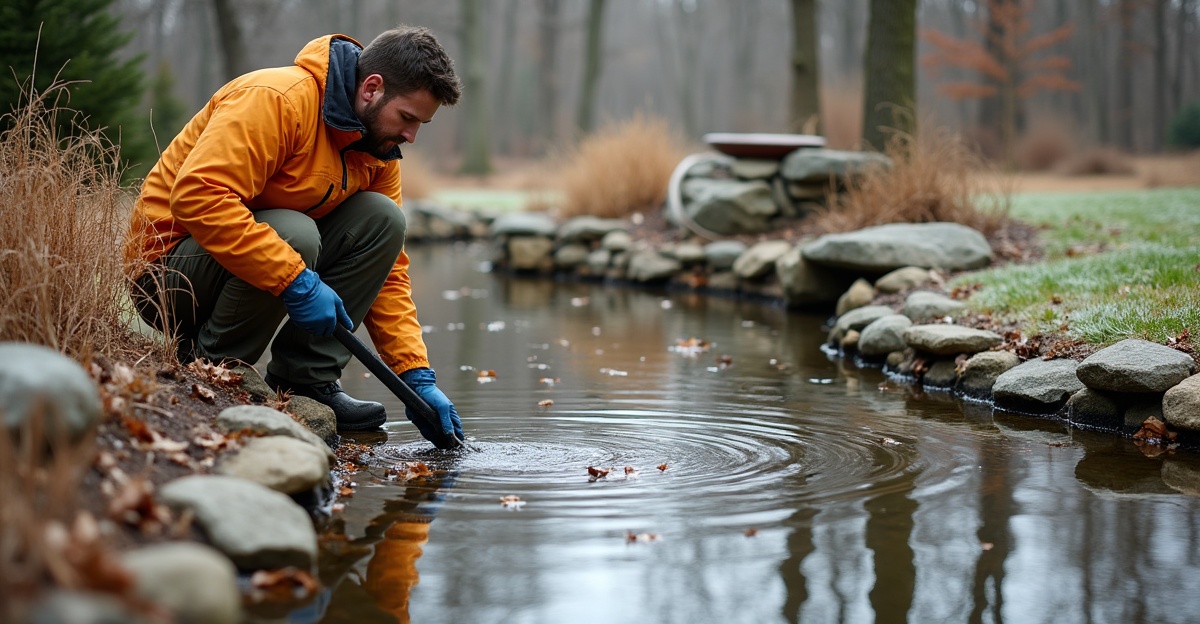
We start Minnesota water feature maintenance by identifying the system. Fish ponds, fountains, pondless waterfalls, and plumbing-fed features need different winter preparations. Before sustained freezing begins, we remove debris, protect fish pond gas exchange as needed, drain vulnerable components, and inspect drainage and electrical equipment for freeze risks.
Key Takeaways
- We don’t winterize every feature the same way. Established fish ponds often stay filled, while fountains and pondless systems usually need drainage and shutdown.
- We remove leaves, sludge, and debris before winter. This protects water quality, prevents blocked drainage, and reduces trapped gases beneath pond ice.
- We maintain a safe opening for fish pond gas exchange with properly sized de-icing or aeration equipment. We never chop or hammer ice.
- We turn off, unplug, clean, inspect, and store pumps and accessories according to manufacturer instructions. We also drain exposed plumbing, basins, and fittings.
- We monitor stonework, drainage paths, roof runoff, GFCI outlets, and wiring throughout winter. We recommend professional service for leaks, shifting hardscape, frozen plumbing, or electrical concerns.
Start by Identifying the Water Feature We Have
Water features in Minnesota should not all be winterized the same way. The right approach depends on whether we have a fish pond, pondless waterfall, decorative fountain, water wall, or a system connected to exposed plumbing.
Long freezes, deep snow cover, freeze-thaw cycles, ice expansion, and shifting drainage patterns all affect outdoor water feature maintenance. Frozen water inside a pipe, pump housing, basin, or fitting can expand and crack the component. Melting snow and roof runoff can also create water feature drainage problems around stone, pavers, and surrounding grade.
Fish ponds and ornamental ponds need a different plan than fountains. We generally do not drain an established fish pond as a blanket rule. Fish, pond depth, water quality, circulation, and aeration all affect safe winter pond maintenance.
Pondless waterfalls and recirculating streams often need a seasonal shutdown, especially if they use exposed pumps, plumbing, or shallow reservoirs. Decorative fountains, bubbling urns, and water walls commonly require complete drainage and protected storage for removable equipment. Features connected to irrigation, municipal water, or integrated plumbing may require a professional shutdown or blowout.
We begin Minnesota water feature winterization before sustained freezing temperatures arrive, rather than relying on one fixed date. Proper preparation reduces risk, but severe weather, aging equipment, poor original installation, and existing drainage issues can still cause damage.
Protecting Fish Ponds Through a Minnesota Winter
Fish pond winter care Minnesota homeowners need depends on fish species, pond depth, water quality, and the pond’s circulation setup. A deep, well-built pond with healthy fish may need a different plan than a shallow pond with limited water volume or recurring water-quality issues.
Before winter, we remove fallen leaves, sludge, and other organic debris. Decaying material can reduce water quality and increase gases beneath the ice. We also reduce feeding as water cools, then stop feeding based on species-appropriate guidance.
Maintain Gas Exchange Without Breaking Ice
A pond can freeze across much of its surface during pond care winter conditions. The goal is usually not to keep the entire pond ice-free. Instead, we maintain a safe opening for gas exchange when the pond and fish need one.
A properly sized pond de-icer can hold an opening in the ice. Pond aeration in winter can also support gas exchange when the system is correctly selected and placed. The proper approach depends on pond depth, fish load, aeration layout, and the equipment manufacturer’s guidance.
Never chop, hammer, or forcefully break pond ice. The impact can stress fish and damage liners, stone edges, and equipment. Standard salt, chemical ice melt, antifreeze, and unapproved additives also do not belong in or near a fish pond. These products can harm fish, plants, wildlife, pets, and nearby landscape materials.
Shallow ponds, recurring fish loss, unclear species needs, poor water quality, or inadequate winter equipment call for professional guidance. A careful review before hard freeze conditions set in can prevent a difficult spring cleanup.
Shutting Down Fountains, Pondless Waterfalls, and Exposed Plumbing
Decorative fountains, bubbling urns, water walls, pondless waterfalls, and plumbing-fed features often need a more complete shutdown than an established fish pond. Water left in exposed lines, valves, fittings, pump housings, bowls, and shallow basins can freeze and expand.
For pondless waterfall winterization, we first follow the manufacturer’s instructions for the pump, filter, lighting, and any automatic-fill equipment. Many systems require us to turn off and unplug equipment, remove pumps and accessories, clean them, inspect them, and store them indoors. Proper fountain pump winter storage helps protect components from freeze damage and makes spring startup easier.
Should we drain an outdoor fountain for winter in Minnesota? Often, yes. Fountains and plumbing-fed features usually need drainage where the system design requires it. We drain bowls, reservoirs, exposed lines, and vulnerable fittings as directed by the manufacturer. This advice does not automatically apply to established fish ponds.
Some systems need a professional blowout, especially where a feature connects to irrigation, municipal water, integrated plumbing, or lines that are difficult to access. Frozen water feature plumbing can crack below grade or inside walls, where damage may not become visible until spring.
Covering a basin or fountain can help in certain designs, but only if the material and manufacturer recommend it. An improperly installed cover can trap moisture where it freezes, expands, and damages the basin. We never use standard antifreeze, salt, chemical ice melt, or unapproved additives in or around a water feature.
For complicated systems, our water feature services can help determine the right shutdown method before winter arrives.
Watch for Freeze-Thaw Damage, Drainage Problems, and Electrical Hazards
Freeze-thaw damage landscaping issues often begin with small cracks, loose edging, minor settlement, or blocked drainage. Repeated thawing and refreezing can widen gaps in stone, shift pavers, worsen leaks, and move water into places it should not collect.
We inspect edging, stonework, pavers, basins, retaining elements, and overflow routes before winter. During midwinter thaws, we also watch for movement, cracks, settling, and water escaping from the intended path. Ice buildup and overflow can shift edging, crack hardscape, and damage exposed plumbing.
Clear leaves and debris from nearby drainage paths before snow arrives. We also monitor roof runoff, snow piles from plowing, and melting snow that may direct excess water into the feature. A well-built water feature needs drainage that works during spring melt as well as summer rain.
Electrical safety deserves the same attention. Follow manufacturer directions for pumps, heaters, de-icers, lights, and extension cords. Use properly functioning GFCI-protected outlets for any GFCI outdoor water feature equipment. Do not handle damaged cords, exposed wiring, submerged electrical parts, or equipment that repeatedly trips a circuit. Those conditions need a qualified professional or electrician.
For a feature surrounded by patios, stonework, walls, lighting, or grading concerns, coordinated outdoor project management helps address the full issue instead of treating a visible crack as an isolated problem.
Minnesota Water Feature Winterization Checklist
This Minnesota Water Feature Winterization Checklist helps us prepare before sustained freezing weather. Manufacturer directions and site-specific conditions should always guide the final plan.
Seasonal Shutdown and Inspection Steps
Before winter, we work through this water feature maintenance checklist:
- Identify the feature type and confirm manufacturer instructions for shutdown, storage, and winter operation.
- Remove leaves, sludge, and organic debris from ponds, basins, filters, overflow areas, and nearby drainage paths.
- For fish ponds, adjust feeding as water cools, check fish health, and use properly sized de-icing or aeration equipment when gas exchange is needed.
- For fountains and pondless systems, turn off and unplug equipment, remove components for storage when recommended, and drain vulnerable bowls, basins, reservoirs, and plumbing.
- Inspect pumps, filters, fittings, valves, hoses, and exposed plumbing for wear, leaks, and trapped water.
- Check stone edging, pavers, basins, retaining elements, overflow routes, and surrounding drainage for movement or blockage.
- Test GFCI outlets and inspect cords, lights, heaters, de-icers, and electrical connections before snow and ice limit access.
- Monitor the feature after heavy snow, major thaws, roof runoff, and snow removal nearby.
A fountain winterization checklist reduces avoidable damage, but it does not replace the manufacturer’s instructions, electrical expertise, fish-health guidance, or an onsite assessment. Complex systems deserve a closer review before winter settles in.
When Winter Maintenance Calls for Professional Help
Some water feature maintenance tasks are straightforward. Others involve plumbing, electrical components, shifting hardscape, fish health, or drainage conditions that need experienced assessment.
Contact a local professional if we find visible leaks, cracked basins, loose stone, shifting pavers, repeated pump failures, circulation problems, frozen plumbing, or damaged wiring. Tripped GFCI outlets and unsafe electrical conditions need immediate attention. Fish health concerns, poor water quality, and uncertainty about overwintering also warrant professional guidance.
Complex installations deserve a coordinated review when they include integrated lighting, waterfalls, patios, retaining walls, drainage systems, or plumbing connections. Addressing the cause early can prevent a larger water feature repair Shakopee property owners may otherwise face after spring thaw.
Common Minnesota Winter Water Feature Questions
Should we drain an outdoor fountain for winter in Minnesota? Often, yes, where fountain design and manufacturer instructions call for drainage. This is common for decorative fountains and plumbing-fed features. Established fish ponds should not be drained as a blanket practice.
Can we leave a pond pump running in winter? It depends on pond design, pump placement, circulation setup, and manufacturer guidance. Some pumps should be shut down and removed, while other systems use winter-rated circulation or aeration equipment.
How do we keep a fish pond from freezing completely? We maintain an opening for gas exchange with properly sized de-icing or aeration equipment when appropriate. A de-icer does not need to melt the full pond surface.
Is it safe to break ice on a pond? No. We never chop, hammer, or forcefully break pond ice.
What should we do about a water feature leak after winter? Turn off affected equipment when it is safe to do so. Avoid handling electrical components, then have the basin, pump, plumbing, drainage, and hardscape assessed.
When should we begin winterizing water features MN properties have? Start before sustained freezing temperatures, based on the feature’s design and current conditions.
Outdoor Oasis helps Shakopee-area property owners throughout Scott, Carver, Dakota, and Hennepin Counties assess complex features, identify freeze damage, improve drainage, and plan practical repairs before spring. For a straightforward review of a pond, fountain, or waterfall system, contact Outdoor Oasis to discuss the next sensible step.